
Case Study
Aerobic Faecal Waste Treatment Unit
- Year:
- 2024
Emergency context
The Western Germany Ahr Valley flooding in July 2021 was one of the most devastating flood events in the region’s history, with rainfall exceeding the amount typically seen in an entire month in just a few hours.
The flooding caused numerous landslides and flash floods, leading to over 180 deaths and extensive damage to buildings, roads, and infrastructure, highlighting the growing risk of extreme weather events due to climate change.
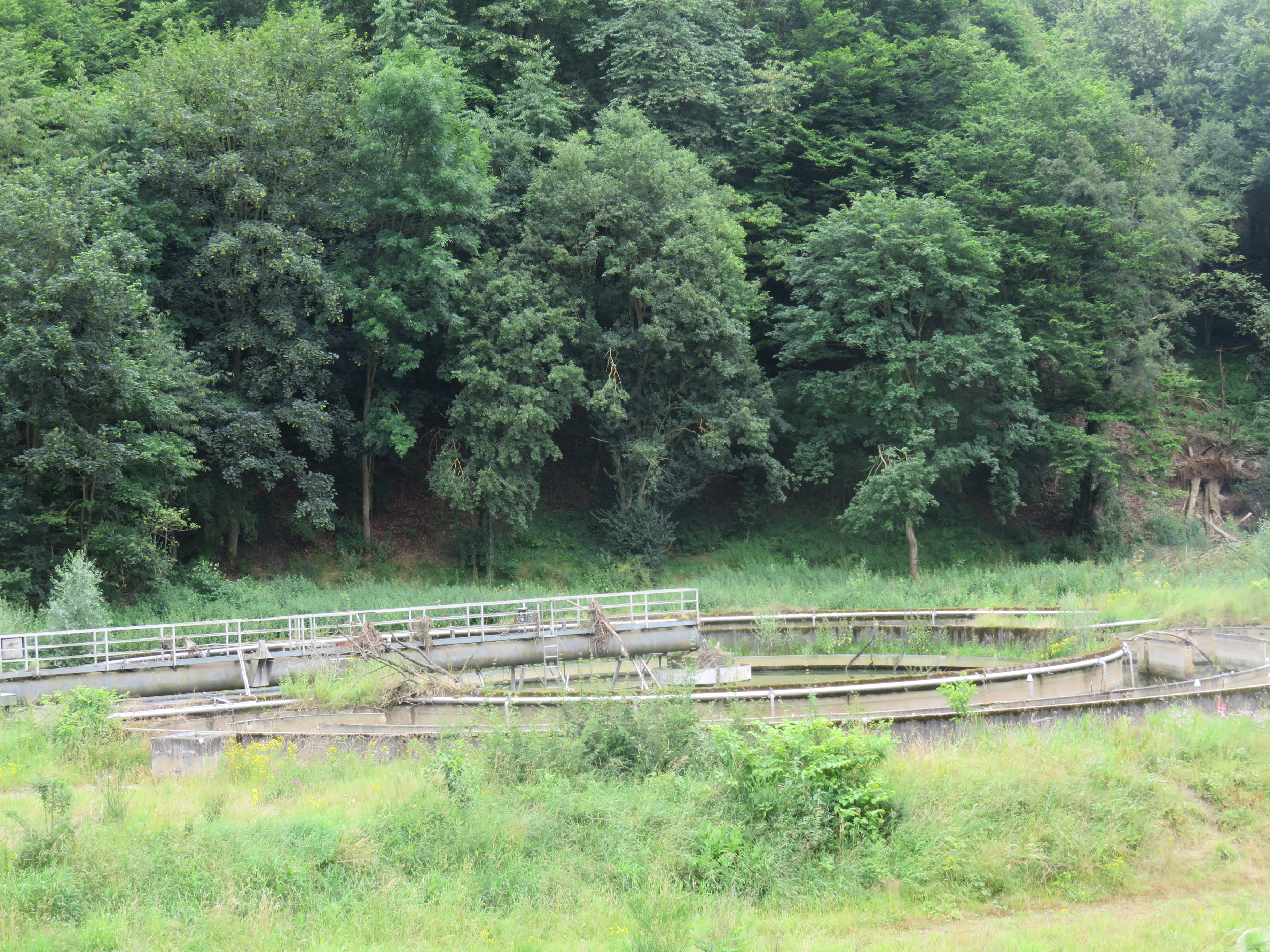
During the flood, all the wastewater facilities of the valley were destroyed. There were two FSTPs which were destroyed. They were located on the river side which is under environmental protection and also really nearby the river with flooding risk.
The village of Mayschoss, was the first one where a new FSTP was implemented as it was the first one to be reconnected to water network leading to important quantity of wastewater produced.
Treatment process
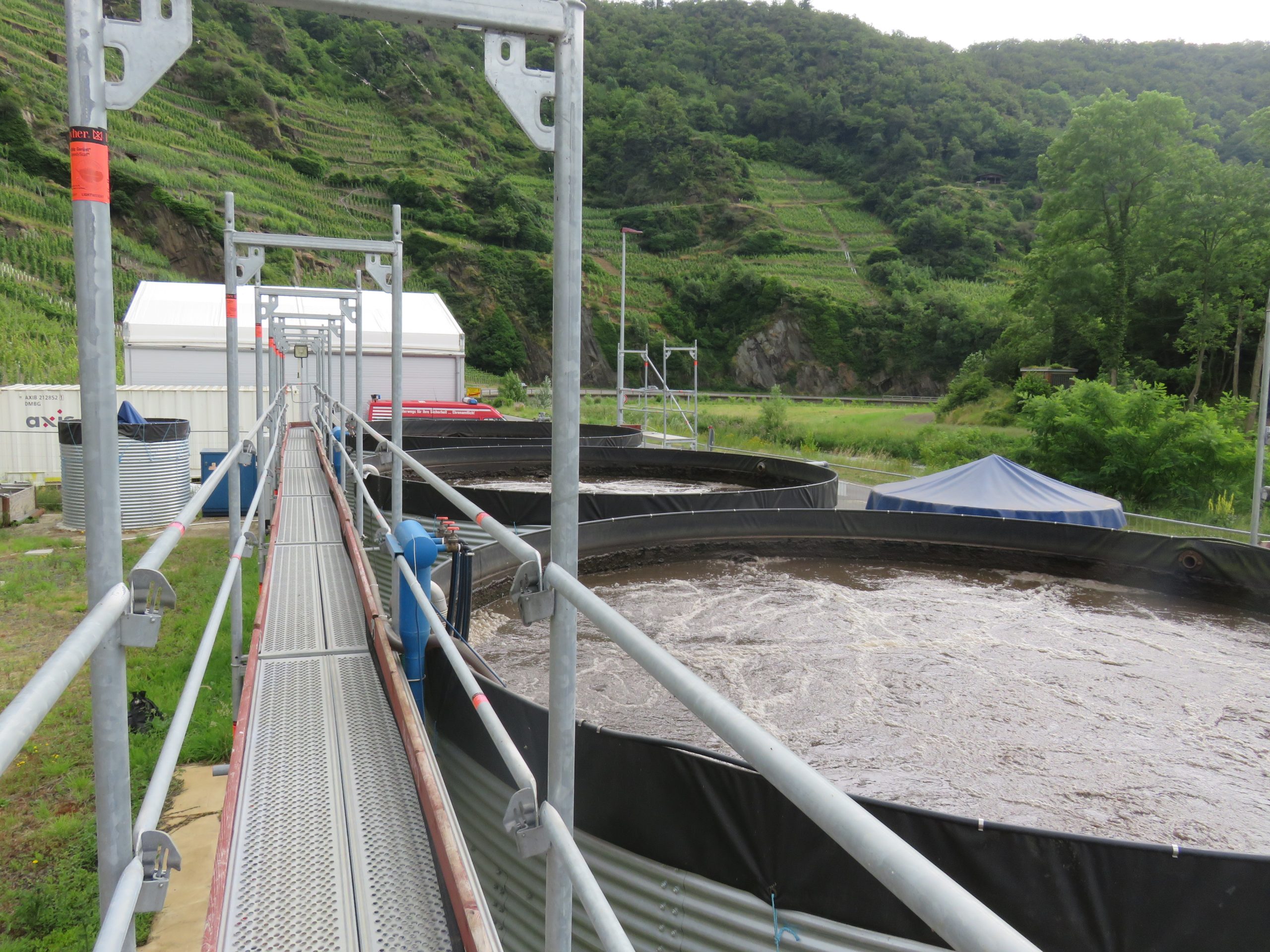
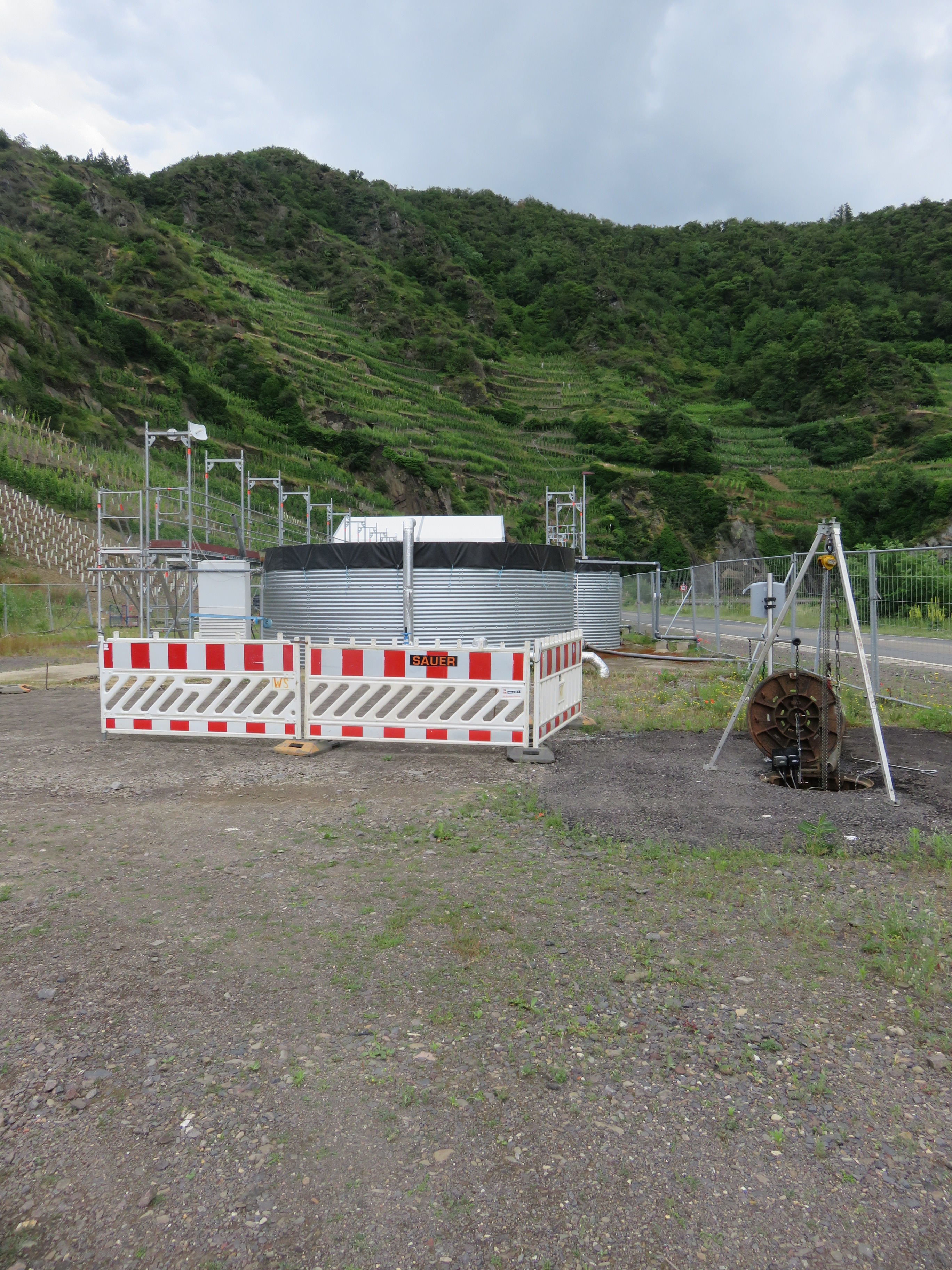
- Primary Clarifier capacity 75m3
- 1st ABR with a capacity of 75m3
- 2nd ABR with a capacity of 75m3
- 3rd ABR with a capacity of 75m3
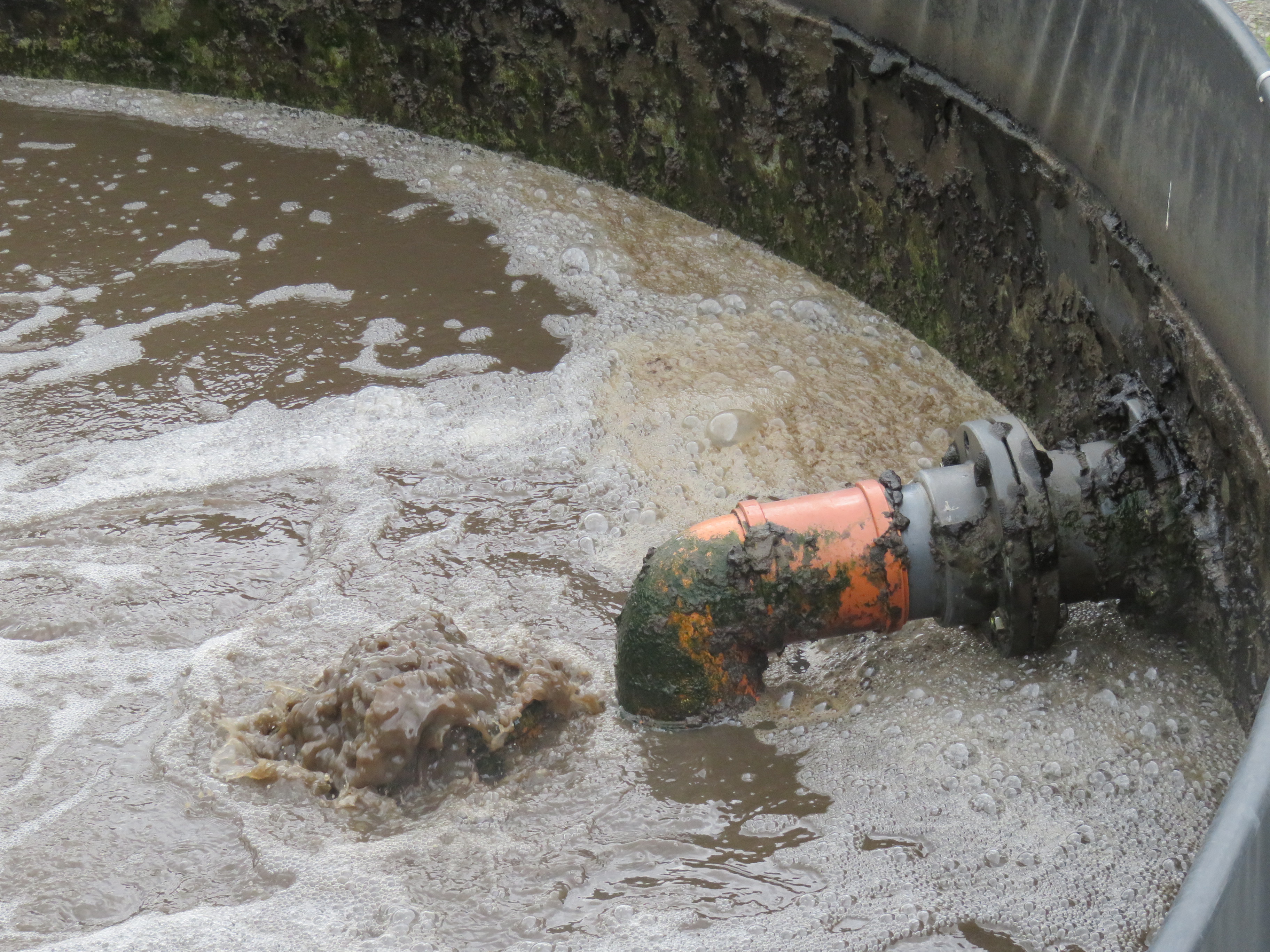
There is also a biomass extraction from the clarifier. The biomass is collected and conveyed by truck to a larger FSTP.
Initially, the aeration process was done is a continuous way. At first, they did not have time to monitor the performances of the aeration process in a continuous way. They did the first performances monitoring 3 to 6 months after the beginning of the treatment.
They found out that the continuous aeration was not the best technical choice, and they decided to installed a time control for aeration and also to monitor nitrification.
After one year of operation, the company changed the aeration system. Initially, the aeration system was on the top of the tank. This system was more robust but not suitable for the quantity of wastewater treated by the FSTP.
They had to modify the treatment process to adapt to the design population. Initially, there were asked to implement a FSTP with a capacity of 5m3/ day but it was without taking into account waste generation from wineries and touristic activity of the valley.
System redesigned because initially it was for international deployment with mainly black water.
Initially, the GRC was asked to provide a system for 6 to 12 months and then extented to two years. German authorities are planning to relocate all the FSTPs from the Ahr Valley in another valley but there is not official date. Until then, the waste water will remain treated by the current treatment plant.
Assessment & design feasibility
The Ahr Valley is a very touristic valley, well known for its wine. This touristic activity is bringing a lot of tourists in the valley with an impact on wastewater production during specific touristic events.
During the pic of the touristic season, the village is hosting 4000 persons while it has 600 inhabitants.
The touristic activity started again couple of months after the disaster with some wine events organized.
90% of the wine from the valley is produced in the village where a wine cooper is located.
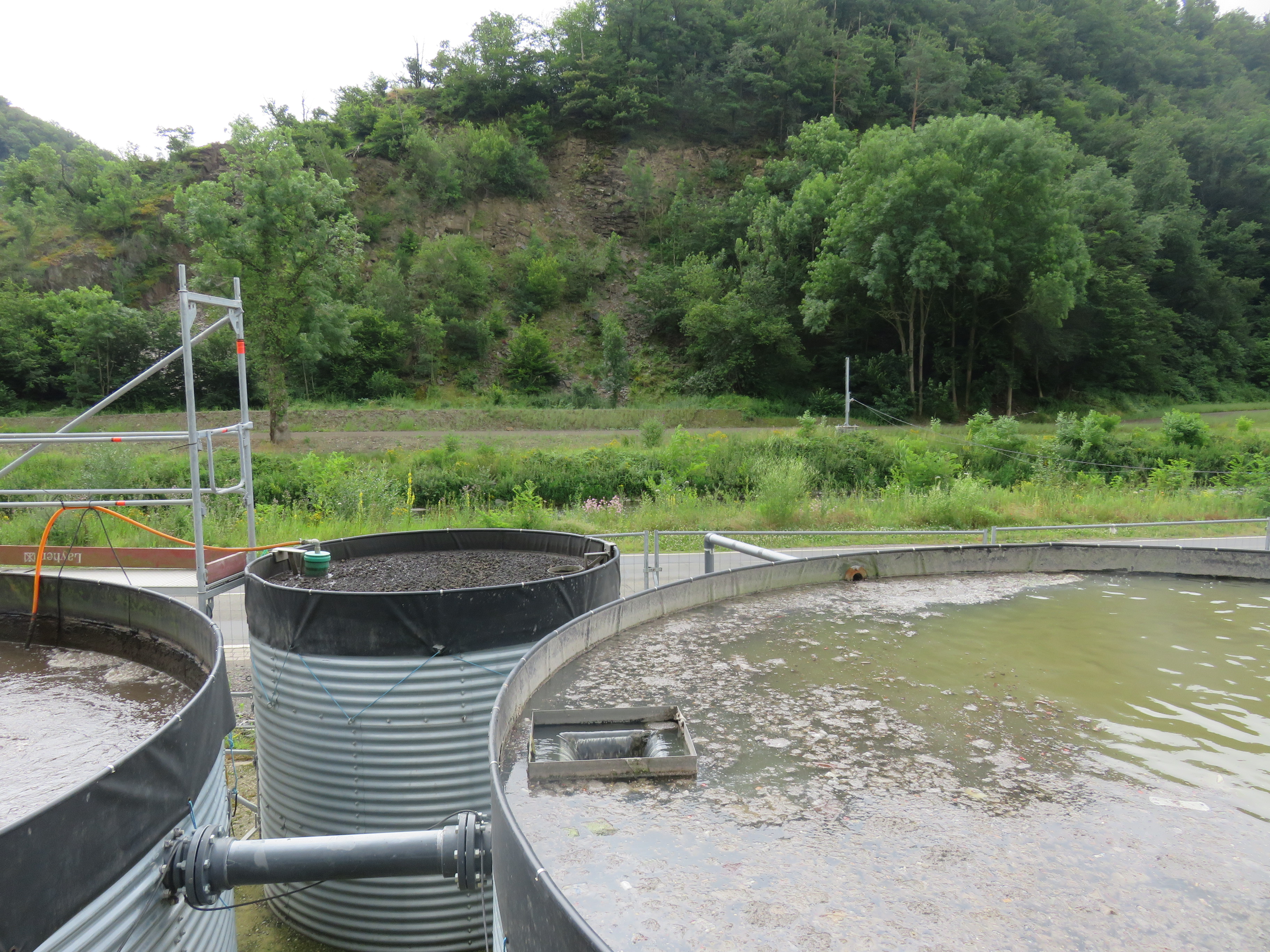
Construction
3 days for ground preparation, 8 days construction time, 11 days in total. Replacement of 200 - 250 m of new sewer to the old system. The old sewer was completely destroyed. They connected the whole street to the generator, regardless of the distance from the WWTP.
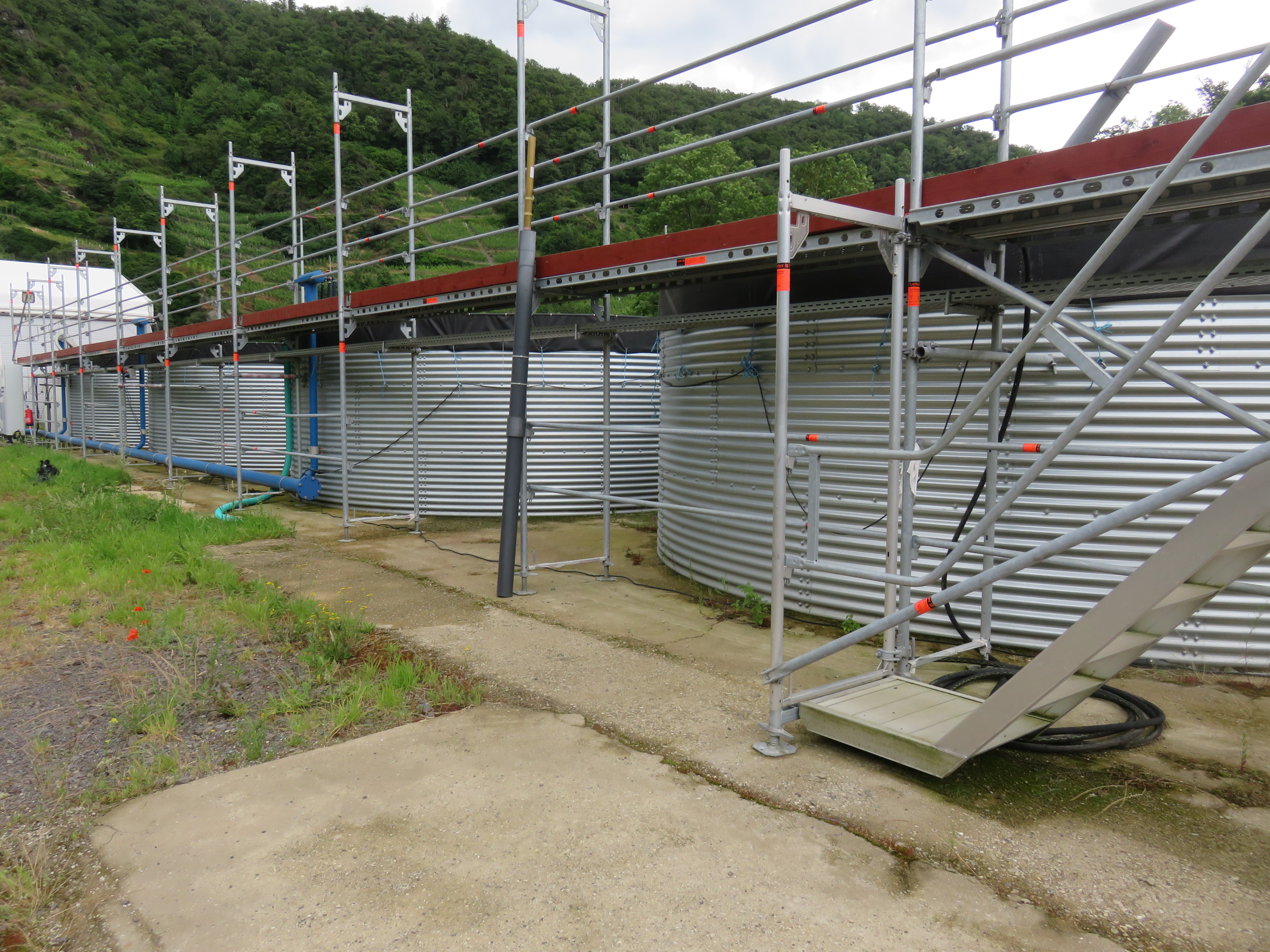
Operation & maintenance
Need a team of 3 people:- Engineer to be the technical supervisor- 2 technicians at field levelDuring the first year of the FSTP, the performances monitoring and process controle were done with the field lab of IFRC. Since the first day the German authorities are also monitoring the performances of the facility. The field lab was installed just nearby the FSTP. After the hand over to the public utilities, there are two types of monitoring:- Communal level by the public utility itself- Regional authorities to see if the performances meet the German standardsA worker must come once per day to remove hygiene products.
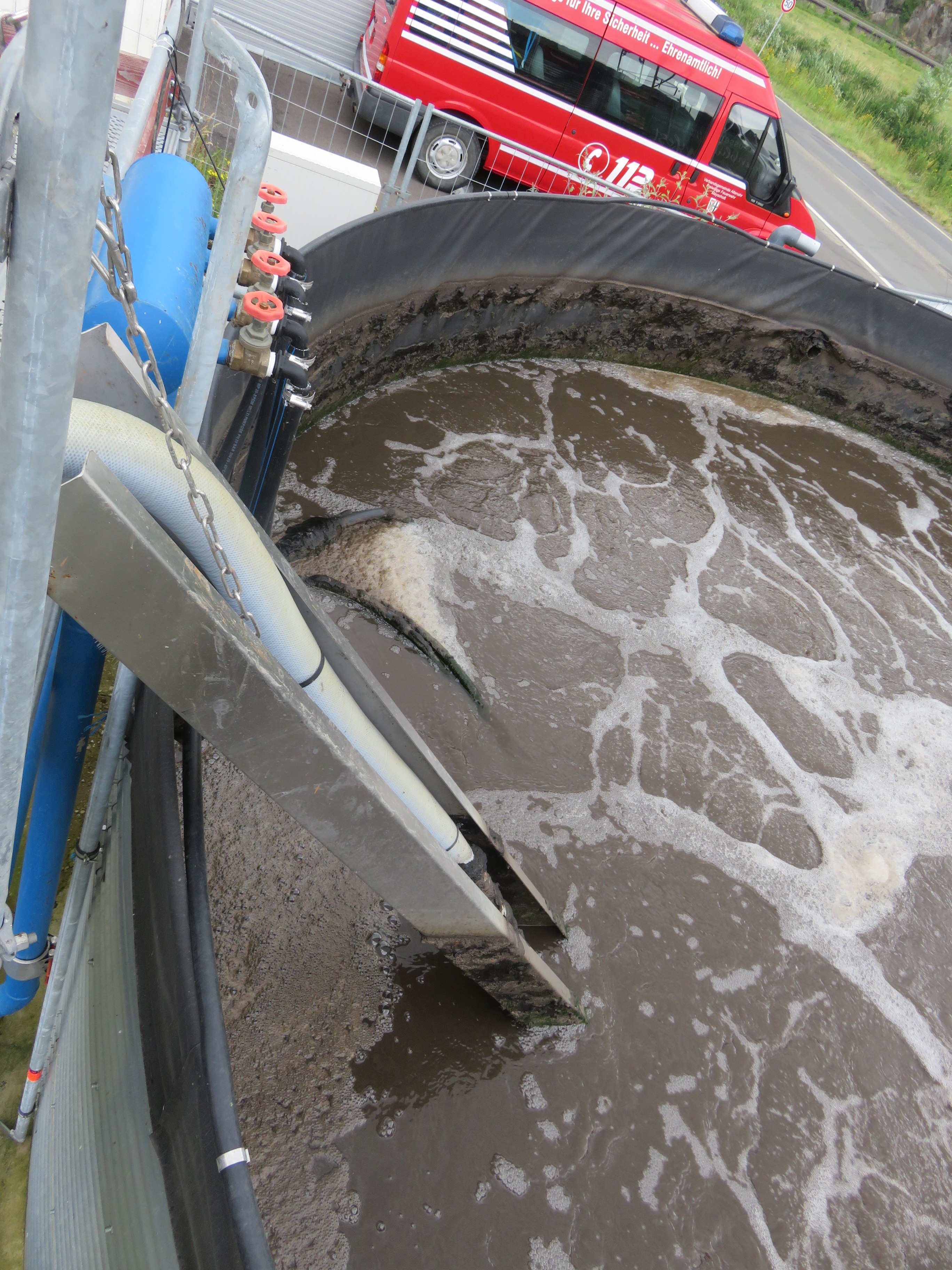
Strengths
• Performances exceeding German legal standards
• Short time to be implemented
• Modular depending on the flow
• Able to adapt and change technologies over time to improve performances
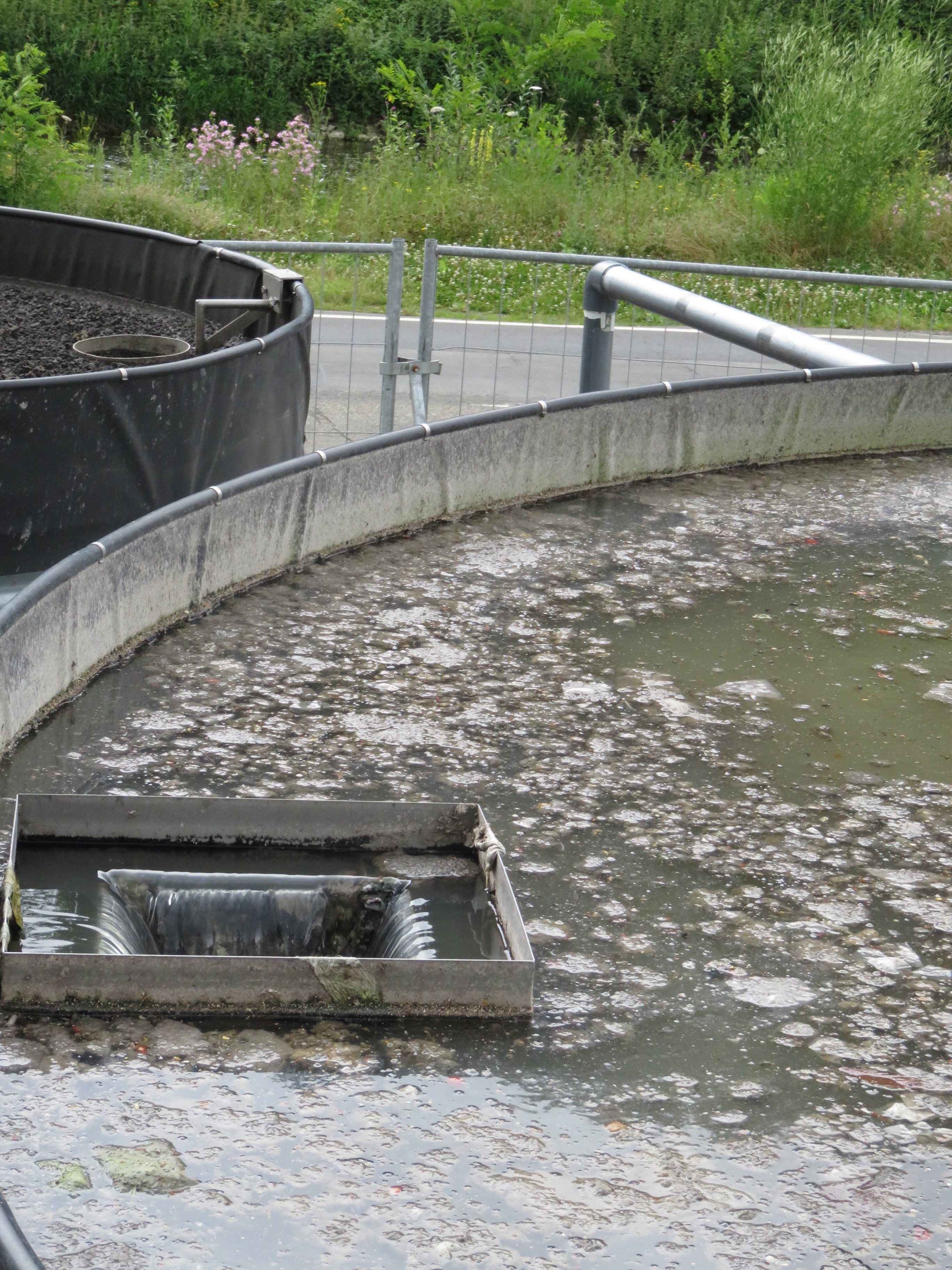
Weaknesses
• Evolution of the flow but can be controlled with the pump
•
Project details
- Design population: 600 people
- Design input flow: 130 m³/day
- Real input flow: 78 m³/day
- Design input faecal sludge COD: 700
- Design input faecal sludge total solids: 1200
- CAPEX per design input flow: 2850
- Construction time (weeks): 2
- Required space: 15,4
- Main treatment objectives: BOD / COD Reduction, Nutrient reduction, TSS and TDS reduction
- Technologies employed: Activated sludge, Settler
- Source of sludge: Flush toilet, Handwashing Facility
- Final outputs: Biosolid, Effluent
- Skills level: Design and Engineering Specialist, FSM specialist for construction, FSM specialist for design, FSM specialist for operation and maintenance
- Resources needed for operation: Electricity, Engine, Water
- Local constraints: Flood prone area, Mountainous or hilly terrain, No connection to the electricity network, No road access